Trips and tours Balkans 1 Small Czech tour Poland The bay of Naples
MALTA & SICILY
Day 1: ... - Malta (D)
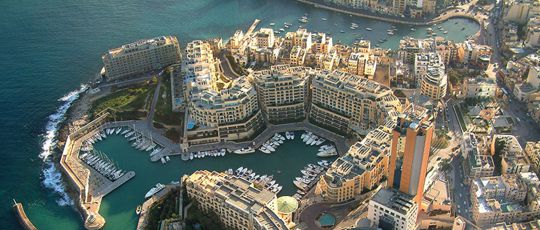
Arrival to Malta in the afternoon hours. Meet and greet the guide at the airport, transfer to your hotel. Hotel check-in and time for some refreshments. Get to know the surrounding area of the UNESCO World Heritage town on foot before dinner (short orientational walk). Dinner at the hotel, overnight in Valetta.
Day 2: Valetta – Rabat - Mdina (B,L,D)
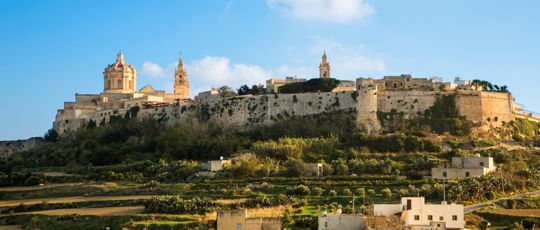
After breakfast start off with a full day orientational tour of Malta. Starting in the capital with the Co-Cathedral of St John, which is nothing short of a gem and quite simply a must see for any traveller. It is described as the first complete example of high Baroque anywhere. Among the treasures found in the Cathedral are the unique Caravaggio painting depicting the beheading of St John, the extraordinary paving of more than 300 marble tomb slabs (the burial place of several former European princes) and the splendid vaulted central nave with frescoes by Preti. Right next door is the Grand Master’s Palace, now the seat of the president but long before that the seat of the Knights. The most fascinating view over the city is from the Upper Barrakka gardens offering a stunning view of the Grand Harbour. Built on top of a demi-bastion, both locals and foreigners relish spending hours taking in the sights. A number of statues and monuments adorn the gardens, including one dedicated to Winston Churchill. Break for lunch. Continue across the island to an area occupied by the medieval walled city of Mdina and the town of Rabat which has been inhabited since at least the Bronze Age. Mdina is one of Europe's finest examples of an ancient walled city and extraordinary in its mix of medieval and baroque architecture. The Phoenicians established a settlement here and the Romans a city. The most exciting sight in Rabat is the St. Paul’s Catacombs, representing the oldest and largest evidence of Christianity on the Maltese islands. A fascinating opportunity to take a look into a labyrinth of underground tombs from the 3rd century. Across in the walled town, the cathedral of St. John or the Mdina Cathedral a late 17th-century church that stands on the traditional site of the house of the governor Publius, who received the Apostle St. Paul when he was shipwrecked on Malta. The cathedral replaced a previous Norman structure that was destroyed by an earthquake. Free time for some . individual exploring and some souvenir shopping. Head towards dinner in a local restaurant. Return to the hotel and overnight.
Day 3: Gozo (B,L,D)
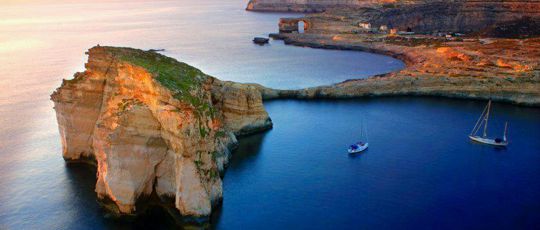
After breakfast you will be invited in full day of discoveries on the neighbouring island of Gozo, Known as the island of Calypso, Gozo is Malta's sister and smaller island, peaceful, less sophisticated and much slower in pace. A charming little island, measuring 14 by 7km, with a population of 40,000, having a way of life rooted in fishing and farming. Here, there are no factories, only cottage industries and very few hotels. A ferry service runs every 45 minutes from Paradise Bay, north-west of Malta, to cross the 5km wide channel we’ll use the ferry. The good thing about Gozo being so small, is that distances are short, allowing the visitor to pack in so much natural beauty within a day. The day will start with a visit to the cliffs at Ta’ Ċenċ and Mġarr ix-Xini, a little harbour at the end of a canyon that can be reached from the little hamlet of Sannat. A ten minute drive and one is in Xlendi bay, the prettiest little fishing village imaginable with its varying shades of blue and green. It lies at the bottom of a steep sided valley, cradled by cliffs on both sides. Lunch. Dwejra is next from Xlendi bay, separated by the promontory, a unique site where all of nature’s beauty comes together. Home to the Inland Sea, the Azure Window, the Blue Hole and the Fungus Rock. Back up the road from Dwejra, the Ta’ Pinu church, a pilgrim church and an architectural masterpiece. Within sight of Ta’ Pinu, the town Zebbuġ, which gives access to Marsalforn bay, down a very steep hill that yields the most magnificent coastal views, and on a clear day - the possibility of seeing Sicily in the distance. Gozo too had its share of pre-history and the Ggantija Temples are probably the most impressive on the islands. The two temples stand proud, side by side, on the Xaghra plateau and are bound together by a massive wall, opening onto a common forecourt. Gozo's capital is Victoria, crowning which is the Citadel, the fortified town above it. It was from behind its walls that the people sought refuge from the Turks and the Corsairs. One can well imagine what life was like in the middle ages here, so little has changed. Returning to the harbour and going a little off route via Qala, the most stunning views of Comino and its Blue Lagoon for which it is so famous. Gozo is well known for its woollen goods and handmade lace, honey and cheese. We will also visit the market where we will have free time for shopping and to sample all these at first hand. Drive back, cross with the ferry for dinner in a local restaurant. Return to the hotel and overnight.
Day 4: Valetta - Zurrieq – Catania (Sicily) (B,L,D)
After breakfast travel south towards The Blue Grotto, which is actually a number of sea caverns on the southern coast of Malta, west of Wied iz-Zurrieq harbour and across the small uninhabited islet of Filfla. Every day from sunrise until about 13h a unique sight can be observed here. The cave's location combined with the sunlight and water show numerous shades of blue. Several caverns mirror the brilliant phosphorescent colours of the underwater flora; other caverns show a deep dark shade of blue. We will take the boat for a more up close and personal approach to the cave. Continue to Hagar Qim, discovered under rubble in 1839 and dated from around 2400 - 2000 B.C. The 4,000-year-old temple is the best-preserved of several ancient limestone temples in Malta. The largest megalith at Hagar Qim is some seven metres high and weights around 20 tons. Much of interest has been unearthed here, notably a decorated pillar altar, two table-altars and some of the `fat lady' statues on display in the National Museum of Archaeology, Valletta. The site itself has connotations with a kind of fertility cult. Lunch in a local restaurant. Continue towards the airport for a short, 45 minute flight to Catania. Transfer to the hotel and some free time for refreshments. Proceed for dinner in a local restaurant. Return back to the hotel and overnight.
Day 5: Catania (B,L,D)
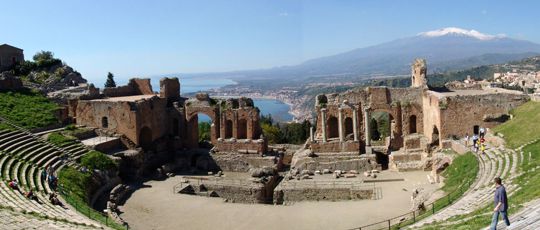
After the breakfast start the day exploring the city of Catania. The visit will start from the real heart of Catania, the Roman Amphitheatre, built using basaltic dark lava stones, a level lower than the upper baroque town. You will feel the special baroque atmosphere strolling past its elegant buildings, squares and splendid churches. You will be able to see the many layers on which the new town stands, the first dating back to the Roman period. Continue to the University Palace with its lovely courtyard decorated with Etna pebble mosaic, The Cathedral (fortress church), two of the “Seven Doors” protecting S. Agatha's treasure and the famous “candelora” (weighing around 1200kg) in full silver sculptured by hand and carried on people's shoulders all around the town during the patron saint's celebration week. Just a 10 minute walk away is the Ursino Castle, where Frederic the second lived. You will find an abundance of quaint shops, boutiques, great restaurants, very tempting cafeterias with unique Sicilian ricotta or almond and pistachio cookies or traditional ice-creams. Before finishing the tour, you can't miss a visit of “Pescheria”, the open fish market which reminds us of an African souk, with all the fishermen shouting their prices. You can taste some fried fresh fish matched with the best of Sicilian wines. Proceed to Taormina. Lunch in a local restaurant. Taormina, built on Monte Tauro, was founded by Andromacus at the behest of Dionysius the Tyrant of Syracuse in 392BC. The first Punic War saw Taormina falling to the Romans in 212BC and the town became a favourite holiday spot for Patricians and Senators, thus starting Taormina's long history as a tourist resort. Idyllically perched on a rocky promontory high above the sea it offers exceptional views of the most famous European volcano – Mt. Etna and towards the resort of Giardini Naxos, the first Greek colony on Sicily. Taormina's past is Sicily's history in a microcosm: Greeks, Romans, Byzantines, Arabs, Normans, Swabians, the French and the Spanish all came, saw, conquered and left. The focal point of our visit will be the Corvai palace and the Ancient Theatre, built by the Greeks in the 3rd century BC. The theatre was enlarged by the Romans about 600 years later and it is second, in terms of importance and size, only to the one of Syracuse. Beautifully restored mediaeval buildings, breath-taking views around every corner and a giddy network of winding streets strewn with shops, bars and restaurants make for a perfect holiday spot. You will have the rest of the day at your disposal for shopping. Dinner. Proceed towards the hotel and overnight.
Day 6: Catania (B)
Breakfast in the hotel. Drive to the airport. Flight back to your destination...
End of tour
|
Tour inclusions: · transfer to and from the airport · mini coach/van/bus services throughout the program · ferry to and from Gozo · single airline ticket Malta – Catania with 30kg baggage allowance (taxes and fees included) · 5 x accommodation in dbl/twn rooms in 4****/5***** hotels with breakfast on B&B basis · 4 x lunches as per program · 5 x dinners as per program · entrance fees to: St. John’s Co-Cathedral, St. Paul’s Catacombs, Hagar Qim temple, Ggantija temples, Blue Grotto boat trip, Greek-Roman Theatre Taormina · English-speaking guide throughout the tour · VAT, taxes and fees.
· single supplement
· Valetta · island of Gozo · ancient walled city of Mdina · city of Catania · ancient Roman Taormina
|
.png)


.png)





.png)
